
St. Petersburg Refacing — Maple-Framed Shaker Doors, Painted Frames
St. Petersburg, FL
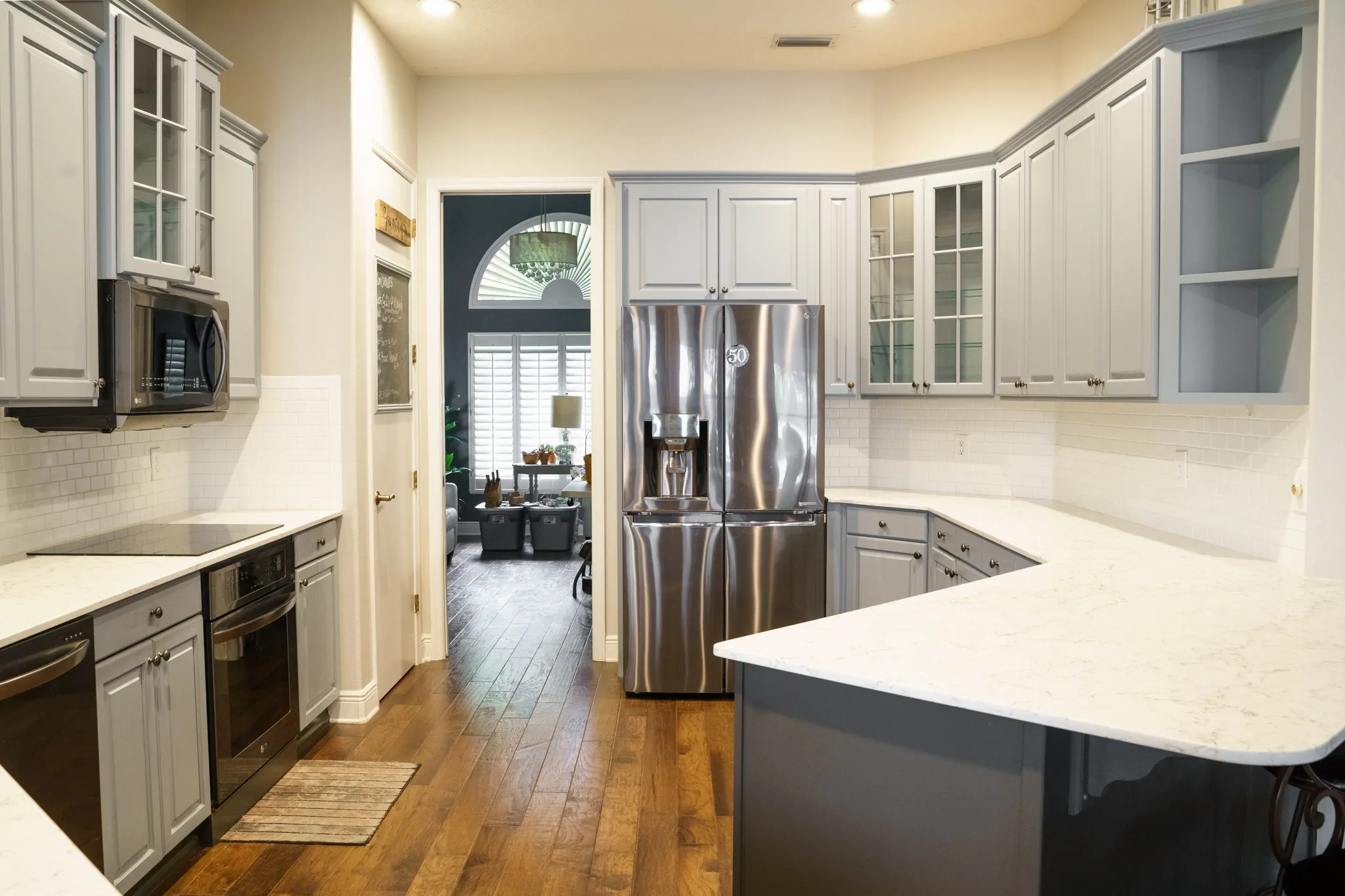
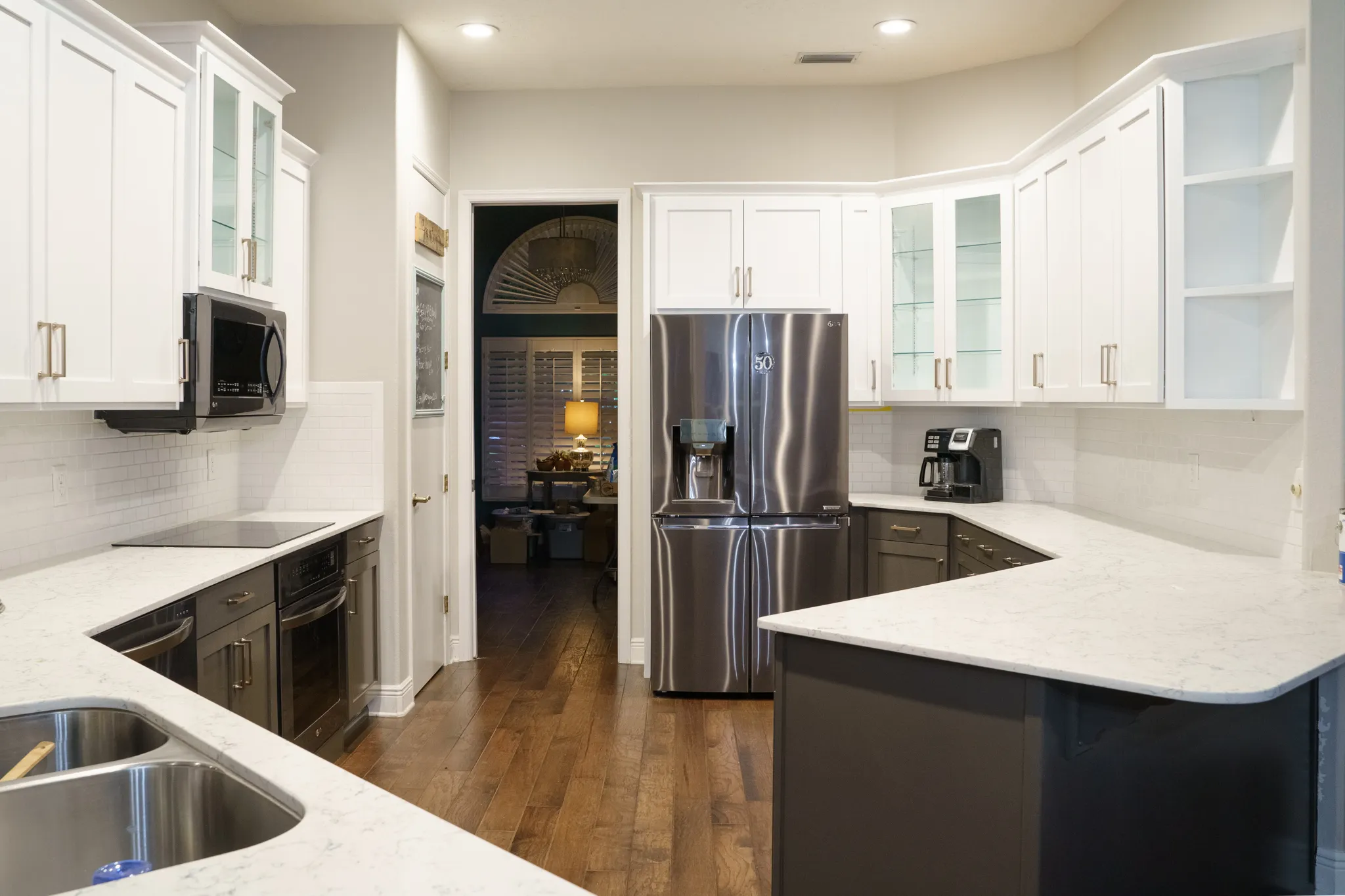
- Cabinet style
- Shaker, maple frame with MDF center panel
- Finish
- New doors, painted frames
New doors, existing boxes, and every counter, backsplash and floor in the room left exactly where it was. The two decisions worth explaining are what the doors are made of, and what we did to the frames.
How these doors are built
The doors here are shaker, with a maple frame around an MDF center panel. That combination is deliberate, and it is not a compromise.
Maple gives the door its weight and its durability. It takes the wear, it holds the hinge screws, and it is what your hand touches every time. The MDF sits in the middle, completely encapsulated by the maple frame — the less durable material is the part nothing ever touches and nothing can get to.
The reason not to build the whole door from maple is cost. Maple is the more expensive material, and once a door is going to be painted, nobody will ever see the difference between a maple center panel and an MDF one. Paying for solid maple under an opaque finish is paying for something the finish hides. Put the maple where it does work; put the MDF where it does not need to.
These doors also have a reverse center panel. On a standard shaker the panel sits back from both faces. On this one the back of the door is flush to the frame thickness while the front stays recessed — so you get the shaker look you wanted from the front, and considerably more material behind it. The door has real weight in the hand when you open it. That heft is most of what people mean when they say a cabinet feels premium.
Why we painted the frames instead of laminating them
This is where our refacing differs most from the quotes you will get elsewhere, and this kitchen is the clearest example of it.
When a refacing job is going to a solid color, the industry norm is to laminate the cabinet frames — wrap them in a skin to match the new doors. There are three problems with it.
Laminate usually stops at the face. It generally does not carry around the inside edge of the door opening. So the front of the cabinet looks new, and then you open the door and the three-quarter-inch face frame is still showing the old finish. You are looking at it every time you reach for a plate.
It is only glued on. Laminate is bonded to the frame with adhesive — a layer sitting on top of the wood. Primer and paint bond into the substrate. One is attached to the surface; the other becomes part of it.
And it costs more. Painting the frames is the cheaper of the two.
Better-looking, longer-lasting, and less money. There is no real case for laminating boxes, so do not let a competitor present it as the standard or the premium option. If a refacing quote says the frames are being laminated, ask why — and ask what the inside edges of the openings are going to look like.